

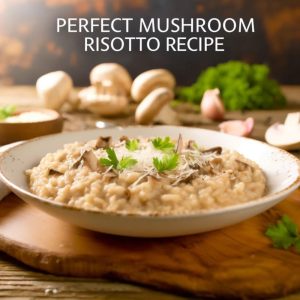
How to Make the Perfect Mushroom Risotto
What is this blog about? This blog is about creating the perfect mushroom risotto.…

In modern cultivation, more growers are shifting toward simplified, enclosed grow systems that reduce setup complexity and limit environmental variables. As this approach has become more common, a specific category of cultures has emerged: genetics selected to perform reliably in bag-based growing environments.
These are often referred to as bag-optimized genetics.
This term describes cultures that have been selected and stabilized for consistent performance in contained grow systems, where airflow, humidity retention, and gas exchange differ significantly from traditional open setups.
Bag-optimized genetics are cultures that have been selectively refined for traits that align with enclosed growing conditions.
Instead of focusing on broad adaptability, the emphasis is on repeatable performance inside a controlled, self-contained environment.
Key characteristics typically include:
These traits are not accidental—they come from repeated selection of cultures that perform predictably under the same conditions.
Bag-based growing environments create conditions that differ from open-air cultivation systems in several important ways:
These conditions can strongly influence how a culture develops, especially during the transition from colonization to fruiting.
Some genetics adapt well to these parameters, while others produce inconsistent or sparse development due to sensitivity to airflow and gas exchange differences.
One of the most desirable outcomes in cultivation is a uniform surface-level fruiting pattern, often described as a full canopy.
This type of growth is not random. It is typically the result of genetic traits that promote synchronized pin development and even distribution of fruiting sites.
Traits associated with strong canopy formation include:
These characteristics can be stabilized through repeated selection of consistently performing cultures.
Fast growth alone does not guarantee reliable results.
In bag-based systems, stability is often more important than speed. A culture that grows extremely quickly but develops unevenly can produce inconsistent results, while a slightly slower but stable culture may yield far more uniform outcomes.
Stability-focused genetics tend to:
This predictability is especially valuable in simplified cultivation environments where adjustments are limited once the process begins.
Bag-optimized cultures are typically developed through repeated selection of desirable traits over multiple generations.
Instead of relying on highly variable starting material, cultivators isolate and continue working with the most consistent performers.
Over time, this process leads to:
This is essentially a refinement process that prioritizes consistency over randomness.
Because bag-based systems limit external adjustment during growth, the initial genetic choice becomes a primary factor in overall outcome quality.
Once inoculation occurs, most variables are fixed. As a result, cultures that naturally align with the environment tend to outperform those that require more dynamic airflow or environmental tuning.
Genetics suited for these systems generally:
When cultures not suited for enclosed systems are used, several issues may appear:
These outcomes are not necessarily caused by poor technique, but by a mismatch between genetic behavior and environmental structure.
As cultivation methods become more streamlined, consistency is becoming more important than experimentation for many growers.
Bag-optimized genetics are part of this shift, focusing on:
This makes the process more accessible while improving reliability across multiple cycles.
See bag-optimized genetics in action with the all-in-one grow bag or the Ready-to-Fruit MycoBag, or browse all genetics.